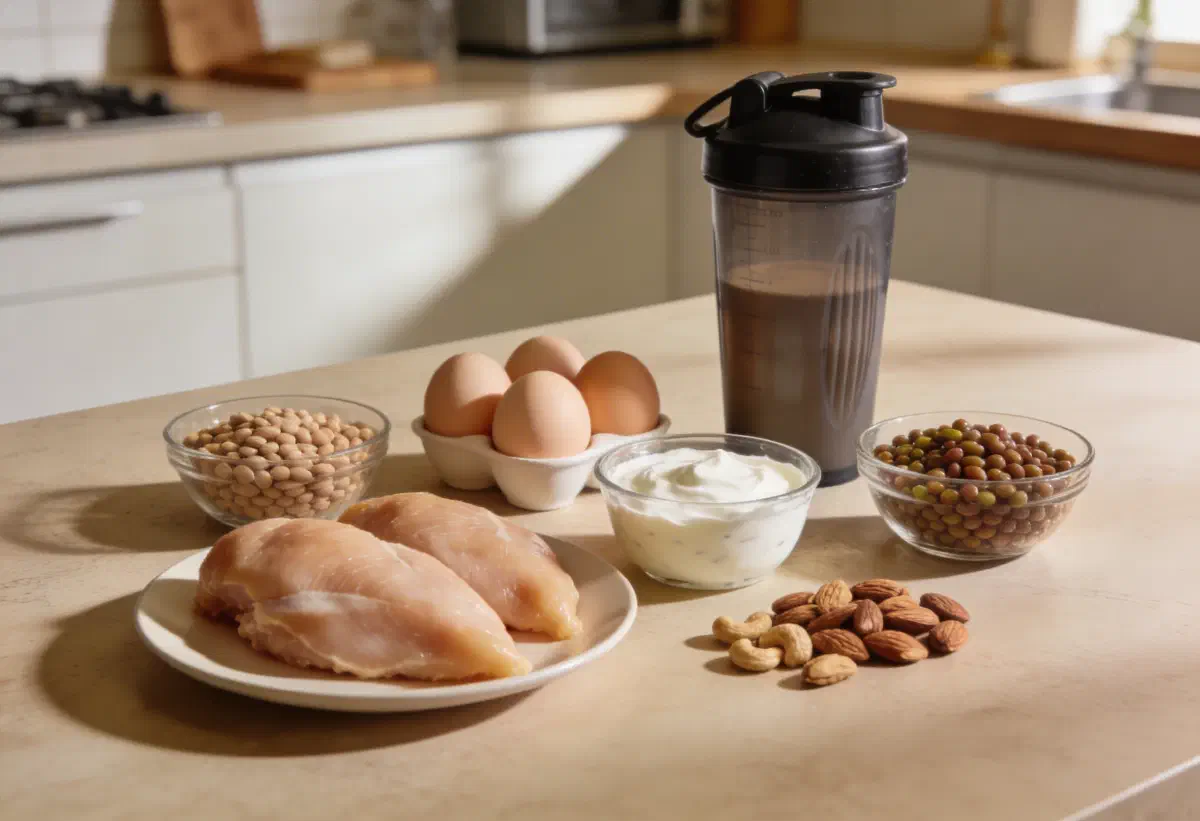
Walk into any gym and you’ll hear people debating training programs, rep ranges, and recovery methods. What you’ll hear less about — but what matters just as much — is what happens outside the gym. Specifically, what and when you eat.
Protein is non-negotiable
Skeletal muscle growth (hypertrophy) depends on two processes: muscle protein synthesis (MPS) and muscle protein breakdown (MPB). For muscle to grow, synthesis needs to exceed breakdown over time. And the primary nutritional driver of MPS is protein intake.
A comprehensive review published in Nutrients examined how dietary protein promotes muscle hypertrophy alongside resistance training. The authors found that MPS is stimulated in a dose-responsive manner, with leucine (an essential amino acid abundant in animal proteins, dairy, and legumes) being the primary trigger. They noted that adequate protein intake is critical not only for building muscle but also for preserving it during periods of caloric restriction — relevant for anyone trying to get leaner while maintaining strength (Stokes et al., 2018).
Timing and distribution matter
It’s not just about total daily protein — how you spread it across the day makes a difference. A study published in The Journal of Physiology tested three different protein distribution patterns over a 12-hour recovery period after resistance exercise. Participants consumed the same total amount of protein (80g), but in different patterns: 8 small doses, 4 moderate doses, or 2 large doses.
The result: consuming 20g of protein every 3 hours produced the greatest muscle protein synthesis response. Both the very frequent small doses and the infrequent large doses were less effective (Areta et al., 2013).
The practical takeaway is straightforward: distribute your protein across 3–4 meals rather than loading it all into one or two.
The International Society of Sports Nutrition recommendations
The International Society of Sports Nutrition (ISSN) published a position stand on nutrient timing that consolidated the evidence. Among their key recommendations:
- 1.4–2.0g of protein per kg of body weight per day for most exercising individuals aiming to build or maintain muscle.
- Evenly distributed protein feedings (roughly every 3–4 hours) optimize muscle protein synthesis throughout the day.
- Post-exercise protein intake (within a few hours of training) supports recovery and adaptation, though the “anabolic window” is wider than previously thought.
- Carbohydrate timing around training supports performance and glycogen replenishment, but matters most for endurance athletes or those training multiple times per day.
Beyond protein: the full picture
While protein gets the most attention, muscle building also depends on:
- Adequate calories. Building muscle in a significant caloric deficit is difficult. You need enough energy to fuel both training and recovery.
- Micronutrients. Vitamin D, magnesium, and zinc all play roles in muscle function and recovery.
- Sleep. Growth hormone is released during deep sleep. Chronic sleep deprivation impairs recovery and muscle adaptation.
- Consistency. The most perfectly optimized diet means nothing without consistent training over weeks and months.
Putting it into practice
The science is clear: what you eat directly determines whether your training translates into results. A structured nutrition plan that hits your protein targets, spreads intake across the day, and provides enough total calories is the foundation of muscle growth.
For most people, the challenge isn’t understanding this — it’s implementing it day after day. That’s where having a personalized meal plan built around your specific goals and body composition takes the guesswork out of the equation. Instead of calculating macros and researching recipes, you get a plan ready to follow.
Your body is built in the gym. But it’s fed in the kitchen.
References
- Stokes T, et al. Recent Perspectives Regarding the Role of Dietary Protein for the Promotion of Muscle Hypertrophy with Resistance Exercise Training. Nutrients. 2018;10(2):180. DOI: 10.3390/nu10020180
- Areta JL, et al. Timing and distribution of protein ingestion during prolonged recovery from resistance exercise alters myofibrillar protein synthesis. The Journal of Physiology. 2013;591(9):2319-31. DOI: 10.1113/jphysiol.2012.244897
- Kerksick CM, et al. International society of sports nutrition position stand: nutrient timing. Journal of the International Society of Sports Nutrition. 2017;14:33. DOI: 10.1186/s12970-017-0189-4
Ready to transform your nutrition?
Get a personalized meal plan tailored to your goals, preferences, and dietary needs — powered by AI.
Create your meal plan